Sunday, February 14, 2016

The Fruits of Love

In the 1500s, when Europeans discovered the tomato in South America, they believed it to have aphrodisiac qualities; the fruit was quickly given the French name pomme d'amour; in 16th century literature it was considered the "apple of love."
The word "tomato" is derived from the Mexican word tomatl). In the wild, the tomato is part of the nightshade family of narcotics and mild poisons. Those properties are found mostly in the leaves and stems.
Other fruits have symbolic amorous meanings, deserved or fictionalized.
  • An orange was a symbol of fecundity and the blossoms were used in ancient times as brides' wreaths.
  • A mulberry was revered in ancient China, while a classical Western legend claims that the berries acquired their red color only after the Babylonian lovers, Pyramus and Thisbe, bled and died under the white-berried mulberry tree. The Pryamus and Thisbe legend is the basis for the story Romeo and Juliet.
  • A pomegranate is a fertility symbol from ancient times, and in the Bible is compared to the joys of winning a lover (King James version Song of Solomon 4:3, 13; 6:11 ).
A book I recently read gave some theories on the meaning of flower colors and types. But times are changing. Ascribing meanings to agricultural items is probably taking a hit in today's cultures. Blackberry, and Apple will need new notations in the lexicons.

Thursday, December 31, 2015

Working on the Internet

If you haven't already, you might want to make use of more of the benefits provided by the Internet.

A few facts

It's been more than 50 years since J.C.R. Licklider (1915 –1990) began sharing his "Galactic Network" concept. What he conceptualized was a worldwide system of interconnected computers through which data and programs could be quickly accessed from any site. Sound familiar?

The term Internet developed from the concept of "Internetworking Architecture" (the high-level design of a communications system, including the choice of hardware, software, and protocols.) which, in 1972, became the basis for the system. This approach allowed use of individual network technology—not a static network architecture that limited provider choices. And, wow, have we come a long way since then!

What you get is what you look for

1. Join online forums that specialize in your professional field and marketing. Not only can you learn a lot, but offering suggestions to others is a good way to boost your confidence and not feel so isolated as you work. Most forums require little or no personal information from you.

2. For writers, conducting research on the Internet is a phenomenal time saver. Just don't get too intrigued by all the selections and side notes and forget your goal.

3. And then there are blogs. Two decades ago blogs were hard to find and subject matter was limited to the cyber technology and web design. The term "weblogs" (online references, journals and communication between Internet technology [IT] professionals) became shortened to blogs, and cyber aficionados picked up on the idea. Writing, publishing and book blogs make up a significant percentage. Photographers and DIY photo sites also keep blogs. Blog directories list the pages by subject, so finding your specialty is easy. You can subscribe to them, to be notified up new posts, and since many blogs are updated daily, the information is fresh.

4. National organizations all have online presence. The genre book organizations are abundant: mystery, SciFi, romance, young reader...Some sites are specifically for Indie authors, some for DIY authors, others for eBook authors. Photographers can find the preferred camera company, purchasing outlets and myriad posting sites--all with pages of tips and forums.

Freshen up your Internet connection

Because Internet Explorer (I.E.) comes standard on most computers, many people don't realize they have a choice of browsers with which to negotiate the Internet. Moreover, most of them are free. Since 1991, more than a dozen different browsers have been released. Many are faster than I.E. and render pages with fewer glitches—no special java plug-ins needed.

Your mail provider can also be updated. Secure mail servers such as Verizon.net, hotmail, and gmail are efficient, and easily accessed from any electronic device. They can also be configured to forward the mail to your PC inbox, where you aren't restricted to the factory-provided Outlook. (This tip isn't Microsoft bashing, merely suggesting alternatives.)
Don't forget the clouds. Cyberspace storage and retrieval systems are secure and can be accessed from any of the electronics most people rely on: tablets, smartphones, as well as PCs and laptops.


When you choose what will best serve your needs, your productivity will improve.
If you have Internet tips, please let us know.

Tuesday, December 29, 2015

Writing Book Reviews

Book reviews are some of our first memories of writing--the assignment in fifth grade you dreaded. I can recall staring at a sheet of paper and writing, "I liked this book because--" and drawing a blank. Now however, a book review is not something I'm forced to do, and I enjoy it. You could, too. Writing a book review a way to share with others their response to a book and can offer a peek at your expertise and a chance to be published. Periodicals—off line and online—allow many venues for good book reviews. By "good" I mean well written. Praise does not make a good review (although authors really enjoy that), nor does writing only a story-line summary of the book. Here are a few keys to a well-written review.

The read Often the idea of reviewing a book might not occur until after you've read it. In that case, go back and read it again. Use sticky tabs (or your e-book highlighter) to mark interesting passages. While reading, make notes on the major elements such as character development, story line, tone of narration. I once read a book where a character who had seemed primary through two-thirds of the book, vanished without explanation in the story's resolution. A reviewer's reaction to something like this could be pertinent for other readers. For genre fiction, you should be aware of "industry standards" before you read. Don't impose a mystery criteria on a fantasy book.
For nonfiction you want to notice the substantiating information that bolsters (or not) the overall premise. The book's direction should be evident in the title, preface and table of content. If the subject covers elements new to you, read articles and other books on the subject to determine the author's effectiveness of idea and presentation.
Your reaction This key is the basis for your writing. Allowing others know your response to a book gives the review life and substance. In your review, give personal feelings about the voice the author used, or the subject matter of the book. Point out the elements of the book that affected you the most. Was it subtly presented or bold? Did the characters seem alive to you, or one-dimensional? Was the presentation comfortable to read, or did language become too dense or too simplistic? Expressing your views is essential. With fiction you must do this without "giving away" the story. Often focus on the theme, or the development of one major character can support your feelings without telling the whole story.
The writing  As with any piece, your writing should be polished, and the review should follow the basic article format with a beginning, middle and end. A book review is actually an essay set down to give comment on a particular work. So you start with an introduction that suggests your take on the piece and will capture a reader's attention Example: "When I first started reading this book [you would give the full title here] I expected a starry-eyed view of city-life. Boy, was I wrong." An expansion of this sentence could give a briefing about the book--it is contemporary, thirty-something male protagonist, the setting. This is your beginning.
The middle would, of course, be the bulk of your review. It should concentrate on your evaluation of the way the story and characters were developed. Bring in elements you liked and disliked. These will be in the notes you took while reading the book. Cite passages to substantiate your feelings. Keep the tone of your writing consistent and be direct with your statements.
For the end of the review, give your statement about the book--your personal critique. This should in some way relate back to what you said in the introduction. Be certain the review has a feeling of finality and no new elements are included.
The presentation  The layout of your book review should follow basic writing guidelines either from the publisher, or as found in writing books. Your name and contact information should be on the first page, along with the a title for your review. Preliminary information is essential, with the author, title and sub-title, publisher and copyright date (in bibliographic form), number of pages, price and the ISBN number. Fictional example:
Amy Hasselbink
The Hat Trick
My Brief Futboling Experience
New York: Goalsetter Press, © 2003
280pp. $24.50
ISBN 0 00 257013 0

Tell if the book is cloth (hardback), trade or mass market paperback.
With so many online libraries and book stores, you can often publish the review directly the book page for the title you're reviewing. The publisher info is already in place, as well as an overview of the story. On these sites, don't be redundant. Skip right to your book review. The actual review should be in standard manuscript form.
Marketing With reviews for a brick-and-mortar publication, remember to treat this as you would any other submission. After you've written your draft, revised it (and revised it again). Your potential publisher could be a local newspaper, a magazine, or journal. As with any article, research your marketplace. If the book has relevance to a particular community, the newspapers and magazines in that area could be receptive. They can be found in online yellow pages. Don't overlook specialty niches where just a few alterations in your approach or wording could make the review appealing to a different source. As with articles, with just a little tweaking, you can reuse your hard work in many places. If you get enjoyment from book reviewing, you could even suggest yourself for a regular column for a regional or local publication.

Who knew? What you learned by slugging through those school assignments those many years ago could now bring you satisfaction, recognition and (in a few cases) even a little money.

Sunday, December 27, 2015

Stay Safe With Your Sales


Every 6-8 months this purchasing scam resurfaces, where someone contacts by e-mail wanting to buy from your site or purchase some art. The message usually reads something like this:
"I will like to order some items from you and get it shipped to my place in Malta, also i will be paying via my credit card which was issued in the United states as this is the only available means of payment. I have a shipper which you'll contact regarding shipping that can get the items picked up from your location and deliver directly to my door step without hassle and i will also like to know the types of credit card you accept. Let me know if i am welcome to place an order."

Poor spelling and awkward language are often clues to a scam. The thought of a big sales is often pleasing, but the reality is not so good. The credit card number you’d get is probably inoperable, but you won’t find that out until after the delivery truck has carted off your wares.

Other buying scams: A recent article by arts attorney Bill Frazier (reprinted in the July/August State of the Arts [Montana]) cautioned against accepting cashier’s checks. Many counterfeit checks are showing up in the marketplace, and artists are very susceptible, since we often think of these checks as being $safe and not bogus. Payments by cashier's checks are also used by the e-mail scammers.

If you sell at art shows, you might want to visit your bank and pick up a copy of “Know Your Money,” which shows how to validate currency. I always get the jitters when someone hands me a C-note; if the purchase is less than $100.00, I usually say I don’t have change. More information is available online. A colleague recently told me about a pen that when you draw it over a bill, the color that shows will indicated if the bill is legit. I haven't followed up on this; but if it works, I'm all for it. I like to trust everyone, but some times that just isn't safe.

Sunday, November 29, 2015

Business Cards for Artists?

Are personal business cards something an artist should have? Most definitely.

Business cards are ideal for inexpensive self promotion--a way to get your name out.
  • Writers, if you freelance or have published a book or two, the business card can be a mini-flier that tells about your work. 
  • Artists, whether fine art or graphic arts, a business card shows a level of professionalism that will enhance contact with potential clients and galleries.
The basics for your business card are: Your name, phone number and e-mail address. For personal safety reasons, do not list your home residence or studio. If you have an office or P O box, that could be included.

Freelance specialties, such as portrait artist, newsletters and brochures, or regional history should be stated. It's also useful to list a web site URL where more information and examples of your work can be found.

Always be ready to distribute your card. Put them on bulletin boards at the Laundromat, churches and libraries; leave them with tips at a restaurant, and include them in those fishbowl collections set up for winning a free lunch. Tuck them into the envelope when you pay your bills--this especially benefits non-fiction writers and specialty photographers (weddings, kids, pets).

The more business cards you pass out, the greater the chances of reaping unexpected rewards.

Wednesday, November 25, 2015

Too Many Words Slow the Flow

© 2004 Get It Together Productions

Words. The key element of writing. But sometimes, too many words can be a problem, and certain words can change your expressive work into a bumpy read. Some of the common offenders are that and there (it) was/were/is. Overuse of these words is natural to most writers. Our ideas pop to mind and we start writing. We want to get our thoughts on paper! This need is admirable, productive--but often sloppy. Example:
There was a row at the campground last night that went on for two hours. It was started by the ranger when he said that some people needed to move to an area that was less crowded. Before it was over, there were three rangers trucks and two city police cars at the scene that was lit with spotlights from the ranger trucks.
Well, the facts have been given—along with way too many words. The correction comes in the rewrite (see below).

CHANGE IS GOOD: Usually when 'that' is used an 'it was' or 'there was' is someplace nearby, resulting in a bland sentence. These words nullify an active voice, but word choice can revive it. Consider this sentence: It was Ashburn's decision that led to a new program. Both negative elements are here: 'It was' and 'that.' Let's get rid of them. How about: Ashburn's decision led to a new program, or better, Ashburn's decision resulted in a new program.

Here's another example: Margie took the path that led to the well. 'That led to' could be omitted or replaced. Margie took the path toward the well or Margie took the path leading to the well. Better yet: Margie hurried along the path to the well. The modified sentences are more active and contain fewer words.

Another example: There could be some things that would aid their comfort would be better as Some things could aid their comfort. Best would be to mention at least one of the things: More blankets and water could aid their comfort. Notice, even with this detail, the sentence contains fewer words.

SEEK AND DESTROY: The all-important "I-have-to-get-it-out-of-my-head-and-onto-paper" write is finished. You have your theme and story developed. The first draft is complete. Ta daa! Revision time! You read the manuscript, revise and read again...Are you catching those slow-the-flow words? Probably not. As writers, we read our own work knowing what we intended, and thereby seeing what we want to see. The analytical approach is best to seek and destroy the slow-down words. You'll be more productive by setting a specific task than trying to catch the miscues in a proofread. Most word processors have the perfect tool.

Use the "find" command of your software program. It's usually in the "edit" menu. Set it to find 'that', and study the offending sentence. You will quickly see what needs to be cut or how the sentence could be rewritten for better clarity and verve. Hit "next" and you've got another 'that.' Continue to the end of the manuscript. You can search out 'there was' as a sentence beginning by instructing your search tool to match case--'There'--with a capital T.

CHOP, CHOP: Let's go back to the opening campground paragraph--now revised.
Last night's campground row continued for two hours. It began when a ranger insisted some people move to a less crowded area. Before it was over, spotlights from three rangers trucks lit the scene, and two city police cars had arrived.
Sixty-three words have become forty-three words, and the information moves along at a better pace.

More Writing Tip articles are available at the GITP Webpage

Saturday, November 21, 2015

Make Your Characters Vivid

© 2008 Get It Together Productions

What keeps most readers turning the page? Not an intricate plot or big type. Readers relate to the characters. In order to create these crucial elements of your story, it is important to take a long look at your characters. Be certain you know them well and portray them the very best you can. 

Make character sketches for every major character you have. When you do that, here are things to consider.
  1. What type of personality? Is your character exuberant or shy? Maybe someplace in between. Remember, most real people aren't strictly one way or another. It's the blend and sometimes mercurial traits that make them interesting. Perhaps someone doesn't like dogs in the house, but enjoys visiting the zoo. What does that tell you? Here's someone who likes things well defined and orderly. Use these types of juxtapositions to enhance your characters.
  2. How will the events affect this personality and vice versa? Consider the challenges and events that your characters will come up against in your story. How will this shy (assertive), orderly (messy) person deal with what you throw at them? Decide if the event makes a change in the personality.
    If several characters are confronted with the same challenge, write the scene from each character's perspective. These sketches will be notes for you, and when you put the scene in your manuscript, it will be believable and easier to write.
  3. Examine all details to make this person real. Keep in mind each character's age, nickname, upbringing, siblings, date of birth, performance in school, number and type of friends, favorite colors and foods, preferences for movies, books, shoes, athletic or not, and so on. By writing this down, you can keep the facts consistent throughout the story. Readers don't appreciate a character (even a minor one) being nineteen on page seven and on page seventy (only story month later) the same character is eighteen. Also be certain the characters act their age. If someone is fifteen and still likes to play hopscotch, let the reader know why.
Once you start writing your story, a character will sometimes "insist" on behaving a certain way, or a sub-character will want to "take over" a scene. This is a clue to rethink those characters and their importance in a story.

If you're writing nonfiction, much of this character-study work has been done for you. But you still need to decide the points that will enhance the story as you're going to tell it. It is quite easy for the research material to overwhelm your story. Be certain you don't lose your characters behind facts and figures. The statistics have to have relevance to the characters or the story won't be interesting.

Readers appreciate believable and well-thought out characters. The extra time spent in with this important element will boost your hold on editors (your story's FIRST reader) and book buyers.

Find more articles at the GITP website.

Thursday, November 12, 2015

Writing Effective Dialogue

© 2004 GITP All Rights Reserved
Every writer expends a great deal of creative energy developing a story line and limning well-balanced prose with evocative sentences. That's what writing is all about, after all. But fiction writers have an additional aspect to creation—effective dialogue. Very few stories, novellas or novels are without dialogue, and for some writers, this can be a stumbling block.

Listen to How People Talk

If you listen carefully to how people speak, you'll notice that people tend to use shorter sentences in times of high emotion: anger, surprise, awe. "I can't take this! Get out!" versus "I find this situation intolerable. I want you to leave right now."

People ramble a bit when they're nervous or confused. "I know this isn't what you wanted, but I wasn't sure which way to make the diagram fit best on the page so I brought both copies with me. I hope you don't mind."

Young children tend to get pronouns confused or leave out articles: "Me go to store with Gramma."
You'll begin to recognize how different personalities have different word usage and diction. All of these observations can be incorporated into the dialogue you write.

The best grammar isn't always used, either. Even people who write well, don't always speak well. "I've got to get that new CD of Carlson's," takes precedence in speech over the more correct, "I have to buy Carlson's new CD." Word usage and contractions that you might avoid in exposition become quite logical in dialogue: "There's no more to see, so let's get outta here."

Use Dialogue as Enhancement

To be most effective, use dialogue as an extension of your story line and character development. Let's say you have a character, Jane. She's late to the airport. She gets in a taxi and tells the driver she has to hurry to the airport. He agrees.

Well, those are the facts, and it could be left strictly to narration: Jane shoved her way into the cab and slammed the door as she told the driver to hurry to the airport. He agreed. Or dialogue could be used. These examples show how different Jane characters could speak and how the energy of the scene is increased.
  • Plain Jane: "I have to get to the airport really fast. Can you do that?"
    Cabby: "You betcha."
  • Jane of the streets: "The airport, bro, and hit it!"
    Cabby: "I'm on it!"
  • Jane the executive: "Airport. A big tip if you make it quick."
    Cabby: "Yes, ma'am!"
  • Jane the professor: "To the airport, please, and I'm in a hurry."
    Cabby: "Certainly."
You notice the cabby's response was dictated by Jane's words, making the scene more believable. Inconsistencies between people's words and their actions should be used for a reason and that reason should be also noted. For instance, if Jane the professor had said, "The airport, bro, and hit it!" The cabby might have jerked to look at her, or the narration might have commented how Jane chuckled inside at her language--or, both.

Writing effective dialogue is an art all its own and one that should be honed with observation and rewriting. Truly knowing your characters is essential. Reading scenes aloud to yourself or others (writing groups are good for this) will increase your ability to hear the rhythms of sentences and recognize good (not necessarily proper) word usage. With diligent practice, this creative aspect of your writing will become second nature and flow evenly with your story and literary style.

 Get more writing tip articles at GITP

Tuesday, November 10, 2015

U.S. Big Book Publishers and Who Owns Them


It's a well-known fact that most of the major publishing houses have consolidated and merged and rearranged themselves many times over. This has affected magazines as well as book publishers, and many of the holding companies aren't in the U.S.
Simon & Schuster (S&S), founded in New York City in 1924, is currently owned by CBS. Still headquartered in NYC, it is a bastion of fiction and nonfiction, producing more than 1000 titles a year from 35 different imprints, including Pocket Books, Scribner, Atria, Fireside, Touchstone, and Atheneum Books for Young Readers.
Baen Books is a more recent stalwart of American publishing. It was founded in 1983 when a huge reorganization of Simon & Schuster was underway. S&S approached Jim Baen with an offer for him to head up the S&S science fiction line (Pocket Books division). Baen, however, had different plans. He obtained financial backing from some friends and proposed to start a new company named Baen Books. The deal was done and, at the beginning, Simon & Schuster handled the distribution. Nonetheless, many of the book publishers we might assume are "American" no longer hold that distinction.
    Examples:
  • Houghton Mifflin Company, founded in Boston in 1832, is now Houghton-Mifflin-Harcourt (HMH), with the company having purchased Harcourt (formerly Harcourt Brace Jovanovich) in 2007. Several mergers and buyouts have ensued and HMH is now owned by Education Media and Publishing Group (EMPG), an international holding company registered in the Cayman Island. HMH is a leader in the educational publications marketplace. NOTE: Although primaries in EMPG are from Ireland, one of the major investors is Guggenheim Partners, a U.S. investment corporation.
  • Alfred A Knopf, Inc founded in 1915, was purchased by Random House in 1960. Random House also bought Doubleday, and now there's a KnopfDoubleday company under the RH umbrella. It's a publishing consortium of its own, with a half dozen or so imprints. Random House, Inc. has been owned since 1998 by the German mega-media company, Bertelsmann.
  • The Free Press was founded in 1947, became an imprint of Simon and Schuster, was sold in 1960 and merged into the Macmillan Publishing Company. Macmillian, founded in London, opened its first U.S. offices in 1869. It is now part of the large German holding company, Georg von Holtzbrinck.
The publisher umbrellas have a wide span, with most of the imprints belonging to three or four houses. Random House, S&S, Harper-Collins, and Penguin Group (USA) produce the majority of books we see on commercial bookshelves across the country. Former companies have become imprints: Farrar Straus, Henry Holt, Little Brown; and some have vanished (Fawcett, Carol Graf, Arbor).
But there are plenty of small and Indie publishers. Check out the Wikipedia pages to see the more than 500 companies that are competing with the big guys.

Monday, November 9, 2015

Do You Know Your Genre?

Who are you writing for? Yourself? A reader? Most writers start off with a story they really want to tell and then hope/assume other people will be as caught by the story as they are. But with all the books produced each year, that forthright premise isn't always enough.

Readers are picky, and certain expectations are attached--especially to genre fiction. To get to the right audience, you need to know these expectations.

An informative book about genre fiction is Reader's Advisory Guide to Genre Fiction, by Joyce G. Saricks. Published in 2001, ostensibly for use by librarians when cataloging and when suggesting books to readers, the book has great information any writer can use. The detailed information about the expectations for each genre can be valuable guidelines for laying out the story line for your genre manuscript.

For instance, when reading about mysteries, Saricks writes, "Although mystery remains the key, fascination with the characters' lives attracts more and more readers." This suggests that having a complicated mystery with lots of twists and turns isn't enough. Many readers want to know the intimate details about the characters.

If you're writing genre fiction, this book has information as to what librarians and readers are looking for in a particular type of story. Take notes and make certain some of the elements are in your manuscript, then your story will satisfy you and other people.

Saturday, November 7, 2015

Get a Clear Idea of Your Project

Have you been to a writers group, workshop or convention and heard other writers try tell about their Work In Progress? Many fumble a bit, or go on for several sentences about where the concept started, and then laugh with a shoulder shrug.

Although these responses can be caused by a writer not wanting to talk about a WIP (I’ve know several who are rather secretive on this score), most often, they occur when writers don’t really having a true handle on their projects.
Here are a few helpful tasks that could prevent that, even if you don’t want to share details of your work. When you start a new writing project:
  • Write a 250-word (one paragraph) overview of your book. This should describe the main thrust of the story and, in fiction, a bit about your protagonist. Remember, every book is telling a story--even nonfiction.
  • Write a "long line" about your book, using no more than twenty-five words. Imagine you're getting on an elevator, the editor you want to impress is getting off and she says, "What's your book about?" Get it said before the elevator door closes.
  • Determine the audiences for your book. Is it for active children, university women, retired pilots, urban or rural? Target at least three. Once you have those three target audiences, write keywords and a sentence that will tell each group about your book.
By completing these tasks, you will have a clearer direction toward a well-constructed finished product. Keep the information your project folder for reference to see if you are presenting what you intended. The focus of the story might change, and you can adjust the paragraph and long line as needed. Doing this will create a more focused writing, and these items are also good to have if you approach an editor or agent. They will also keep you from being the stammering writer at a workshop.

Friday, November 6, 2015

November Writing Extravaganza NaNoWriMo

It's November, and many MANY people are involved in the sometimes fun/sometimes arduous adventure of NaNoWriMo. This acronym stands for National Novel Writing Month. November is that month with the challenge to write 50,000 words in one month.
NaNoWriMo logo

You think, How silly! Well, maybe. It can often kick start a profitable project, as it did for Carol Buchannan and Craig Lancaster (I name these two of many because they’re fellow Montanans), or merely push a wanna-be writer to use words (and words and words).

NaNoWriMo also has benefits that don't involve personal writing.
Since it's inception in 1999 in a small region of the California coast, it has become an international organization with participant numbers increasing each year. As a nonprofit organization (established in 2006) it partners with schools and libraries projects, especially to aid youngsters appreciation of language and writing.

The public concept of mega-writing might seem cute or masochistic, but NaNoWriMo is a valuable part of the literary community.

Learn more: at Wikipedia and the NaNoWriMo site.

Good Marketing from the Past


On occasion I run across odd gems that deal with writing. One such is the 1922 pamphlet "The Short-cut to Successful Writing." I picked it out of a used book bin, its cover quite intact, thinking what a chuckle this would be. Surprise, surprise! Madam Elinor Glyn, the book's author, offered interesting encouragement to new authors. Here's a Glyn suggestion:

"Every one of the great writers and playwrights you have ever read about or heard of--everyone of them had to begin at a weak starting point. Every one of them was uncertain at the outset. Every one of them had to overcome his or her doubts or misgivings…When they started many didn't really know what they COULD do. The wonderful part about literary ability is that we do not know how much of it we have in us. Then, by persistency, by patient development, by proper guidance, we may some day bloom forth all of a sudden and surprise even ourselves!"
Fine words to remember, especially when embarking on a new project.

Why is this anecdote a marketing tip? Because that's just what Madam Glyn was doing. The entire thirty-two page (book size: 7.5" x 4.75") pamphlet was enticement from her publisher for people to buy her book about writing. It was an early 20th century INFOMERCIAL where on the last page the publisher exhorts, "Right this minute—NOW, when you finish reading this—is your chance to send for The Elinor Glyn System…"

It's good marketing with tidbits of advice, pages of endorsements, and a sincere promise of more in the complete book. Successful marketing develops from offering something to a client, not just hoping people will buy.

Wednesday, November 4, 2015

Beat the Blahs and Avoid the Block

Writers block is often talked about among writers and other creative artists, and is usually looked on as a great affliction unique to the profession. But think about it as two problems, not just one. The first is the moderate Writer's Blahs.
Dictionaries define blah as a feeling of boredom, lethargy or general dissatisfaction. It's a universal condition and not restricted to one profession or lifestyle. Many executives, secretaries, pilots, grocery clerks, teachers, doctors et cetera often get up some mornings and really don't want to go to work. It's an effort to get dressed and leave the house. It's hard for them not to catch a different bus or not to turn their car away from their employment. Nearly anyone with any job will at some time face this malaise and lack of desire to get to work.
Freelance writers get the blahs, too. Those mornings will arise when the brain just doesn't want to fiddle with words and headlines or story plots. The clack of the keyboard is nerve wracking. The manuscript seems just a heap of paper holding down one end of the desk.
There are several productive ways to get over the blahs, and many of them come from advantages freelance writers have over traditionally-employed people.
1. Adjust your thinking: Your most obvious advantage is that you don't have to "go to work." This doesn't mean you've given up on a task, or are shirking duty. If you decide not to write for one morning or day, you haven't committed some "writer's sin." Problems most often become greater with over analysis. You think, "I don't feel like writing today. Oh dear, I must have writer's block! Woe is me!" That thought could get lodged behind all other activities so that nothing seems satisfactory or productive. This creates a tension that could ruin a whole day.

2. Remember that your work is always with you: A freelance writer's main tool is thought. Even when you aren't transferring these thoughts as words to some medium, you're still working. A break from the physical act of "writing" can give a chance for the thoughts to percolate and become better defined.

3. Get some physical exercise: Whether it's a long jog, a trip to the gym or doing isometric exercises in your living room, the increase of oxygen to the brain stimulates thoughts.

4. Indulge in a luxury: Although a 24-hour day often doesn't seem long enough, it's important to pamper yourself on occasion. Have a leisurely lunch or dinner at a fine restaurant; visit a favorite scenic spot; get a massage. These are the types of extras everyone should give themselves. For those who work both a day job and also freelance, these perks are especially important.
I often get the blahs on sunny days. I'm lured to the outside; I think of many non-writing projects that could use my attention. I used to mope inside while urging myself to write, and not doing it; by day's end, I had neither been creative nor productive--inside or out. What a waste.
I've learned that trying to force myself to a task is often counterproductive; it increases discontent rather than lessening it. If you feel indifferent about your work, don't panic, take a break and try one or more of the suggestions listed above. In a short amount of time, a surge of creativity will take you back to your work and the dreaded Writer’s Block probably won't happen.

Monday, November 2, 2015

Punctuation ... --

Here are two elements of punctuation that are helpful in writing.

Ellipsis (…) is used in non-fiction to show where something has been left out of a quoted text. “Hey diddle diddle, the cat and the fiddle, the cow jumped over the moon” becomes “Hey diddle diddle, the cat…the moon.”
The ellipsis shows a reader something has been omitted from this sentence.

In a longer passage, the complete sentence is followed by a period and the ellipsis goes before the next line of text. “Hey diddle diddle, the cat and the fiddle, the cow jumped over the moon.…the dish ran away with the spoon."

In fiction the ellipsis can be used to represent hesitant dialogue. “You shouldn’t…you shouldn’t be doing that.”
Slate has an interesting article that examines this more.

Dash (—), called an em dash in printer’s language, is often represented by two hyphen marks (--); many word processors automatically change this to an em dash. The em dash is most often used to set off a parenthetical clause. I could have written
"The dash—called an em dash in printer’s language—is represented by…"
In dialogue the em dash represents interrupted speech.
“You shouldn’t be doing tha—”
“Why not?” his friend demanded.
When an em dash is used to show interruption, no punctuation follows it.

No space should precede or follow an ellipsis or an em dash.

Friday, October 30, 2015

Expresso Book Machines


Expresso Book Machines (EBM) are developed by On Demand Books, and first went public in 2006. The purpose: to offer good quality books from digital content while you wait. Many of the machines are at universities and libraries, and are now showing up in bookstores. A few publishers
have signed agreements with On Demand Books to have their books available via Expresso Book Machines.

The EBM company also has a self-publishing program where the contract is set as a consignment from the EBM location--i.e. a University Library agrees to pay the author an agreed-to percentage of profits on a books sale through their EBM. The Author sets the retail price.

The machines can be found in several U.S. locations, Canada, and in various western hemisphere locations.
Check out their informative video.

Thursday, October 29, 2015

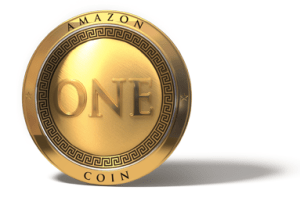
Amazon Coins

Amazon launched their coins in 2013, the concept is still going strong.

New Money! Have you bought yours yet? Buying coins to get discounts on apps and games through the Android App store. An interesting marketing concept. Buying a discount seems a bit strange.

Wednesday, October 28, 2015

Authorgraph


AuthorGraph has been around since spring 2011 (originally called kindlegraph), and is slowly catching on. The site offers a way for authors to send their autograph with one of their titles, and even a personal message if they wish. Readers who already have books can request autographs from their favorite authors.

Information on how it works is straightforward. It is necessary, however, to have a Twitter account (readers and authors). It isn't necessary for the author or the requester to have a particular brand of eReader. A nice keepsake from authors to readers; a nice incentive when readers are making book choices.

Monday, October 26, 2015

Glitches in Self-Pub Works

I recently read a self-published book, the title of which is irrelevant. It was produced by a printing company, where the author was required to furnish not only the manuscript, but the layout and cover. The cover was the best part of the book. The story had potential (although erratic and overwritten); out of curiosity, I finished it.

I have read aesthetically-rough fiction from traditional publishers, but those at least had a professional layout and had been scrutinized by a copy editor. This one—OMG—Not.

    I have no gripe with self-publishing, I do it myself, but if a writer wants a book to be taken seriously, some basics have to be considered. Here are a few tips:
  • Punctuation should be correctly rendered. Three periods (...) does not an ellipse make.
  • Ellipsis are not followed by any other punctuation ["What do you mean...! you have to go?"]. Nor are they followed (or preceded) by blank spaces (same with em dashes).
  • Uppercase letters should rarely be used for emphatic dialogue ["what WE did, did NOT cause what happened"]; description before dialogue should not end with a comma. [Green eyes betrayed her, "I'm sure you do."].
  • Regarding layout, the text alignment in a professional book is justified, with widow and orphan control, usually with 11pt type and type kerning so lines of text have uniformity.
  • Quotation marks and apostrophes must be consistent throughout the text, not curly marks to start dialogue with straight apostrophes in contractions.
Liberal use of Strunk and White (Elements of Style) would have helped, as well as referring to Chicago Manual of Style. A copy editor would have caught ninety percent of these errors, as well as when the character names that changed mid-scene. (I say this, although I read a disastrous book from a traditional publisher where a character’s name changed three times in six pages!)

Come on, authors. If you want to be professional, work professionally! Get a copy editor and invest in a good text layout program. Use of those will certainly make a significant difference in reader response to all your hard work.

2 comments on original post:


Mary McDonald
said...
I haven't done a self-pubbed print edition yet, and partly it's because of the things you mention. Once it's in print, it's out there. I've had enough trouble with formatting my e-pubbed book. I just re-uploaded again last night, and I'm anxiously awaiting the results when it goes live.

GITP
said...
Mary, you are one of the thoughtful ones, who realizes the limitations and wants to put out the best product possible. Bravo! Editing and layout services are available through most self-pub houses now--for a price, of course. But if you're unsure, it might be worth it. Also check some of the writers' forums for recommendations of individuals or companies that have a good track record.

Leave more comments

Friday, October 23, 2015

World Reader Expands Access

Having a tablet or smartphone isn't an option for most people in developing nations. But many of them do have cell phones. The mobile App from World Reader.org has opened the readership to thousands.

This project is offered by a U.S. and European nonprofit whose mission is to make digital books available to children and their families in the developing world. World Reader.org has partners of UNESCO, the Draper Richards Kaplan Foundation, Amazon, and Random House, with support from other international organizations.

A recent article at Tech City tells the success of the project.