Showing posts with label book review. Show all posts

Tuesday, September 1, 2015

The Tithing Herd - Review

A review by Kae Cheatham
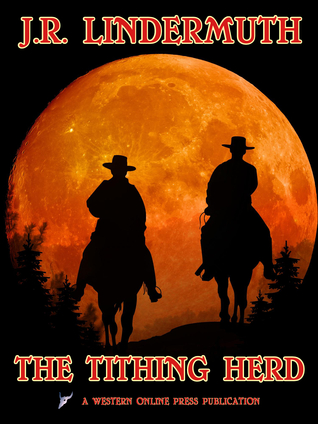


The Tithing Herd
© 2015 J.R. Lindermuth
A western Online Press Publication

This book intrigued me because of the western community about which I hadn't read much. I was also interested in a Western, by J.R. Lindermuth. I've read several Lindermuth books—historical fiction, historical mysteries, contemporary mysteries—and they have been set east of the Alleghenies. My western self wondered if he would give a good sense of place about the West. I should have known it wouldn't be a problem. Lindermuth is too good a writer, and this book settled me strongly in the West, among well-crafted characters.

The story had a distinctive classic Western edge, with ex-sheriff Luther Donnelly on the trail of the nasty criminals who killed his brother. But at the get-go, Donnelly finds young Tom Baskin, who has been strung up by his heels from a lone tree in a desolate location and left to die. Once Donnelly rescues him, Tom has revenge on his mind, too.

Donnelly isn't too keen on his newly-acquired sidekick, and hopes to lose him at the ranch of a friend. But Donnelly and Baskin are both roped into helping Mormon ranchers who have to get their cattle—their tithing herd—the the central holding pens. Donnelly has a feeling this herd will be a draw for the criminals he's seeking.

The outlaws are vicious, and they have plans of their own.
How the story plays out is intricate and violent.

Lindermuth also adds touches of romance, a few that might have been a bit over the top. But I don't appreciate romance elements, and they are a standard element in a classic Western.

In all, I appreciated the story, found the writing top-notch, and wonder if the multi-talented Lindermuth will add more books to this genre.

J.R. Lindermuth is the author of 12 novels, including six in the Stix Hendrick Mystery series. A retired newspaper editor/writer, he is the current librarian of his Pennsylvania county's historical society.
Member: International Thriller Writers, Short Mystery Fiction Society.
Website: www.jrlindermuth.net


Thursday, August 6, 2015

Derelict: Halcyone Space - REVIEW

Reviewed by Kae Cheatham


LJ Cohen
August 2012
ISBN 978-0-9847870-7-4
ASIN: B00KNFS8OW


Hard science fiction is not a genre I usual select, but this came with a strong recommendation. Dueling spaceships is not the focus. Rather, LJ Cohen has written a human conflict of will and emotion amplified by the circumstances of the derelict freighter, Halcyone, suddenly re-energizing and carrying four young people on a wild ride through space. Various unexpected events kept me reading. Here's the publisher overview:
"When Rosalen [Ro] Maldonado tinkers with the derelict freighter, she's just hoping to prove she deserves a scholarship to University. She certainly doesn't count on waking the ship's damaged AI or having three stowaways, Micah Rotherwood and brothers Jem and Barre Durbin, along for the ride. They all have their private reasons for hiding aboard and lives they are seeking to escape, but if the accidental crew can't work together and learn to trust each other, they'll die together, victims of a computer that doesn't realize the war ended decades before any of them were even born."

Programming and artificial intelligence are big parts of this story. The information of what is being done is well described, and I (programming novice) had no trouble following the ins and outs of the many problems Ro has in her attempt to fix Halcyon. I appreciated the speculative elements of what future programming and AI communication might well become. I’ve read several articles that hint at what Cohen has build into her story.


Most compelling was the excellent construction of the different characters. Cohen has developed each with a strong personality and well-explained skill sets. Each felt hard done by their circumstances, but reacted in different ways: Barre, an exceptional musician, turns to drugs; Ro becomes an engineering workaholic; Micah lets revenge be motivation, while Jem, the youngest, is super eager to do what he most loves—programming. All of their unique abilities are vital to extricating them from dangerous plans of smugglers and pursuit by their own government.


This is the first book of a series, and I already have the second book on my e-reader. Looking forward to it.

Sunday, December 7, 2014

Orison - Review

Orison
by Daniel Swensen
© 2014
www.danielswensen.com
published by ninemusepress.com

Fantasy

Overview: Story lives as a thief in the rough-and-tumble city of Calushain, and she plans to escape to better life. But when her stash of money is stolen by her brother, she finds herself faced with a death sentence from her crime-lord boss.

Desperate to pay off her debt, she searches for a score big enough to earn her freedom. Instead, she finds the orison, a magical artifact with the power of dragon’s blood, that could tip the balance of power between the city and the Empire seeking to conquer it.

Is Story the person for the job? Or will the Orison kill her?

This fast-paced book by Daniel Swensen gained my attention with the opening pages. He presented a strong character named Story, and proceeded to involve me in her story. When the point of view switched to another character, I was, at first, disappointed, but soon became engrossed with former-mage, Wrynn, and then with warborn Ashen One-Howl—all with definitive personalities that enhanced the overall story.

I've started, and left unfinished, fantasy novels that are overly caught up in the sword and sorcery. Those elements are endemic to the genre, but often the proclivity to have one gory fight after another, with bodies piling up, seems to be the main objective. Swensen didn't do this. In Orison the characters are what move the story; many of the altercations and confrontations are mental, with human characters interacting with the magical entities and semblances that oversee and manipulate the politics and the populations. Personal concerns are presented for each character—real problems that make the characters more believable.

The various physical battles are vivid and the action well-described. The magic is very nicely written, with phrasing that enlivens the scene and emotions involved.

The language and the very good writing of Orison had me enjoying this novel on the "academic" level as well as for the entertainment. This is Swensen's first novel, and I will add it to my shelf of well-written and memorable books. I'll watch for more from this author.

Tuesday, October 21, 2014

A Field Guide to Happiness - Review


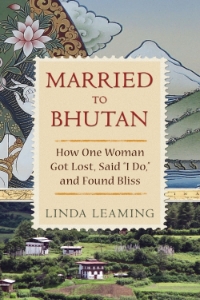
Linda Leaming, who has made her home in Bhutan for more than twenty years, has written another fine book about her life in this isolated small county wedged near Indian and Tibet. Where in the first book Married to Bhutan she described her new life and how she became connected to the people and culture (including marrying Phurba Namgay), this book A Field Guide to Happiness presents more of her views about how and why the Bhutanese maintain Happiness.

Happiness is the mantra of the country, almost a directive from the government itself; but Linda shows that happiness is ingrained in the culture and individuals. The book is charmingly written, in that Linda presents her own foibles and Western-culture attitudes as examples of how to (and not to) live happily.

In a straightforward, to lecturing way, I gained more insight into kindness, meditation and self-awareness. I also picked up a few recipes :-).
I wish there had been some pictures of this place. Linda's descriptions are splendid, because she is a very creative and eloquent writer. I like the cover art, by Phurba Namgay, and I often visit Linda's web page where she often shares pictures of Bhutan and of Namgay's work.


Linda's first book, Married to Bhutan is a well-received and popular memoir; it has been published in several different languages and I have no doubt the same will happen with A Field Guide to Happiness.

Thursday, January 16, 2014

The Other Tree - Review


The Other Tree
© 2013 D.K. Mok
ISBN13: 9781939392725
Spence City

The publisher sent me the download of this book through NetGalley.
 
 
D.K. Mok's The Other Tree is a quest novel that follows the predictable format of someone out to find something that seems to be impossible to find. The main protagonist Chris Arlin , is a cryptobotanist, which gives her an academic interest in finding "the other tree." What is this other tree? Well, most folks are familiar with the tree in the Garden of Eden that produce the apple that sent man into exile from paradise. But there is another tree; the tree of life that has fruit that can give immortality. This tree is thought to still be in Eden--if Eden can be found.

Chris has another interest in finding this other tree. It seems her father is dying of cancer, and she hopes that by finding this tree something can be produced that would help keep him and others like him alive. The mega-million dollar company SinaCorp is also looking for the tree. In fact, Chris's mother had been on the SinaCorp team Eden One, and had died during the quest. Chris blames SinaCorp for her death, and dislikes the materialistic posture SinaCorp presents. Although Chris is approached to join SinaCorp's Eden Two, she refuses.

So now we have the race between the evil SinaCorp, and the altruistic Chris. Chris solicits the help of Luke, a disgruntled priest (whose was named not for the biblical Luke, but for Luke Skywalker). In the manner of most quest stories, Chris and Luke travel to different continents, suffer through a variety of adverse environments, and must get out of perilous situations by ingenious methods. Chris's cryptobotanist background often helps them avoid calamity.

The many characters in The Other Tree include the highly-skilled and deadly SinaCorp people; their single-minded, heartless leader, Marrick; a group of militants who want to stop anyone from finding Eden; and a plethora of subsidiaries who keep the story moving. Most of them are very well drawn, with crisp dialogue. The action is nonstop.

There are a few tongue-in-cheek occurrences, such as Chris being asked for car keys at the end of the book, which she miraculously still has after being chased, nearly burned alive, and tossed around in various horrible manners; but she has the keys. The few attempts at philosophic contemplation are a bit sophomoric, but The Other Tree is well written and moves along briskly. A decent addition to this genre.

Monday, January 13, 2014

Bad Glass - Review

Bad Glass
© 2012 Richard E. Gropp
isbn13: 9780345533937
Del Rey

I borrowed the eBook version from my Public Library's online Overdrive system.


I like this book. I didn't like the characters too much. But that isn't a criterion of mine in order to like a book. Bad Glass is well written, with dynamic characters that sustain throughout the story. The landscape is vivid and believable, even when events and circumstances are very unusual. I like speculative fiction that makes me think and wonder, and keeps me curious about what is going to happen. Gropp's Bad Glass certainly did this.

Dean Walker, the first-person narrator, is a young man who professes to be looking for a way to make his mark in the world. He is a photographer and he goes to Spokane with the hopes of getting exceptional photos that will stamp his name on the profession of photojournalism. Spokane has been off the maps for several months before the Dean gets there. Strange occurrences are going on in the city, and no one has been able to explain what or why. The military are there; they have cordoned off the entire area, not allowing anyone in or out. Dean must sneak into the city, and once there he observes very odd occurrences that he cannot explain. The city is in chaos--a sublime chaos, actually. Dean is robbed of his supplies but rescued by the lovely Taylor. Dean is intrigued with her and readily accepts her invitation to stay at a large house with her and several other people. Bolstered with booze, pot and eventually prescription drugs, Dean attempts to become closer with Taylor while he continues to take photographs he can smuggle out to Internet forums.

Spokane seems to be in an alternate reality. All of the subordinate characters are richly drawn and believable. I was curious about each of them, and wanted to know how they would fare under the odd circumstances. Dean's view of what is happening is not reliable because of the drugs he's been taking; even he admits this at several points. Nonetheless he has photographs which seem to substantiate the curious state of affairs in Spokane. The ending was intriguing, and even after reading the cryptic last chapter, I still had doubts about what had happened.

But this is what made me like the book. I'm still thinking about it, several days after finishing. And I know in a few months when I go back and see the title, I will remember the book quite vividly.

This title was a Bram Stoker Award Nominee for Superior Achievement in a First Novel (2012)

Wednesday, January 8, 2014

A Cait Morgan Mystery - Review

The Corpse with the Silver Tongue: A Cait Morgan Mystery
by Cathy Ace (her first novel) 978-192719098
Torchwood Editions.

I borrowed this Kindle eBook through my Public Library’s online Overdrive system.

Food is a large part of Cathy Ace's premier mystery novel. Protagonist Cait Morgan, is in the south of France for a criminology conference and meets a former employer at a restaurant; he invites her to a dinner party. Cait, a bit overweight and a real foodie, goes to the party and witnesses her old boss fall dead at the table. After that, many of the pertinent scenes take place over meals. Over various meals, Cait garners information from the dinner party attendees who are suspect (as is Cait) in the death. She has lunch and breakfast, and lunch with the dashing Beni, a museum director in charge of antiquities, and he gives interesting information about an ancient Celtic gold collar (legend says it's cursed), that went missing on the very evening of the murder. Cait, from Welsh background, finds the history interesting and wonders if the murder might not have something to do with the missing collar.

Beyond this, the mystery is fairly straight-forward. Like a good Poirot story, I suspected each character of being the perp—especially when another unnatural death occurs. Each suspect has an unique personality that was well defined, from the ditzy widow, to the octogenarian gardener.

The gastronomical settings are well done and fitting to Cait's first-person character profile. But Cait has another important quality as well—an eidetic memory. (A convenient gimmick? Dunno, but the idea is popular, with a TV show about a detective with this talent now going into its third season.) This recall ability and Cait's criminology background get her off the hook with local Nice officials. It also has her as an occasional consultant with the police in her hometown of Vancouver, BC.

I appreciate that this story is nicely garnished with many turns of events. Communication with her colleague in Vancouver is dotted throughout the story. I didn't anticipate the significance. The ending to the mystery is filled with tension.

The ending to the story of Cait's trip to Nice was also satisfactory—nothing canned or expected.

I look forward to reading more of Cathy Ace's Cait Morgan mysteries.

Sunday, January 5, 2014

The Explorer - Review

The Explorer
by James Smythe © 2013
HarperCollins
ISBN 9780062229519

I borrowed this Kindle ebook from my Public Library online Overdrive system.

Three parts. First person. Speculative fiction.
The official book blurb:
When journalist Cormac Easton is selected to document the first manned mission into deep space, he dreams of securing his place in history as one of humanity's great explorers.
But in space, nothing goes according to plan.
The crew wake from hypersleep to discover their captain dead in his allegedly fail-proof safety pod. They mourn, and Cormac sends a beautifully written eulogy back to Earth. The word from ground control is unequivocal: no matter what happens, the mission must continue.
But as the body count begins to rise, Cormac finds himself alone and spiraling toward his own inevitable death...unless he can do something to stop it.
I was drawn to James Smythe's The Explorer, by the intriguing cover design. I found the writing good and the emotions of protagonist of Cormac Easton believable. I didn't like or dislike him--was merely curious to see where the events led. The psychological elements of crew interaction are interesting, but hinge greatly on information that is given in dibs and dabs throughout the book; perspective of them keeps changing. Some of the science elements seems sketchy, but since the story is from Cormac's POV (and he's a science Luddite) maybe that doesn't matter.

I felt the story strung out a bit too long, especially the flashbacks to Cormac's life and dissolving marriage to Elena. Cormac-on-the-ground is boring. I found myself skimming much of Part 2 and 3 because it seemed repetitive with just slightly different slants from before. I realize this repetition is some of the essence of the story and meant to build tension; I wasn't tense. Toward the end, I studied what I read more closely to understand the denouement of the story. This prompted me to return to earlier parts of the book, because a few things didn't jibe. Even on re-reading, certain major factors didn't work.

I don't want to tell too much because I hate giving spoilers. Best I can do is to say The Explorer is something each reader has to experience without forewarning. The review responses on Goodreads run the gamut from 5-star to 1-star. Whatever, it's a good mental exercise to see if you can figure out what's happening.

Sunday, December 29, 2013

Have Wormhole, Will Travel - Review

Tony McFadden’s speculative fiction story, Have Wormhole, Will Travel, is set in Australia and the descriptions of Sydney and the bay are nicely done. The story starts with a woman, Sabrina, certain that she has identified vampires. She is actually seeing two aliens--Callum, and Jacob. They (and many other aliens) have been hanging around Earth for more than 400 years. Sabrina enlists her friend, Mandy, into her attempt to prove these two men are vampires. Sabrina also mentions her beliefs to another friend, Jackie.

Along with the young women who are pursuing Callum and Jacob to see if they are vampires, there is the element of potential Earth destruction. It seems that Callum and Jacob are from a distant planet where the civilization monitors other sentient worlds, looking for advancement that could become a threat to their own planet and culture. When Callum reports that scientist Sam Sheppard is close to developing wormhole travel, his superiors decide that the sentients on Earth must be eliminated. (Sam Sheppard's sort-of girlfriend is, conveniently, Jackie.) Callum doesn’t like the decision to wipe out Earth’s humans, and tries to sabotage the scientist’s work.

There are some funny bits in this story and the characters of Sabrina, Jackie and Mandy are well developed. Callum and Jacob are indistinguishable until the last third of the book. The science presented is done in an articulate manner, but I don't know enough about string theory and wormholes to be able to say if any of it was sufficiently and scientifically accurate--even on a speculative level. Maybe that doesn't matter.

The third person presentation works well, especially to give the actions and reactions of the many characters. In all, Have Wormhole, Will Travel is an upbeat read, although I found much of the story a bit glib.

Thursday, December 19, 2013

Kauai Temptations - Review

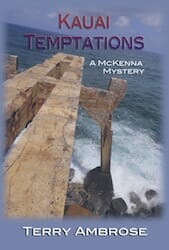
Kauai Temptations: A McKenna Mystery
Terry Ambrose © 2013

I downloaded the eBook from the “Read Now” section of NetGalley.

Protagonist Wilson McKenna is the victim of identity theft, and he’s furious. A retired skip-trace professional, he returns from a mainland visit to his Hawaii home to find overdrafts on his bank account. He admits to his banker that he gullibly had given his social security number to a person on the phone. (I expected credit card fraud and other ramifications from this, but they never came). A box of new checks had been stolen from his postal box, and on the island of Kauai, expensive purchases were being made. McKenna heads to Kauai to find the perp.

One reason the book caught my attention was the Hawaii setting. I’ve never been there (never plan to go), but books in that setting usually offer a touch of the exotic. This one didn’t, and I was amused to be caught up in the urban workings of this little island rather than the expected descriptions of lush scenery, marvelous beaches, craggy clefts... Author Ambrose has references to those things, but gave greater detail to the weird traffic patterns, strip mall layout, and abundance of coffee bistros. It was all a bit refreshing, and nicely done.

As for the story, Ambrose gets protagonist McKenna tracking leads on a very serious crime setup. McKenna will not back off from the investigation, even at the insistence of local law enforcement. His tenacity nearly gets him killed, but solves the case.

For me, the first-person presentation was well done, with witty moments, middle-age anxieties and pompous renderings that made Wilson McKenna very real. Secondary characters (including a car) were also good.

This is the second book in the McKenna mystery series. Possibly more to come. Light and fun reading. I’ll look for them.

Learn more about the author at his Web site.

Thursday, December 5, 2013

Chinese Whiskers: A Novel - Review

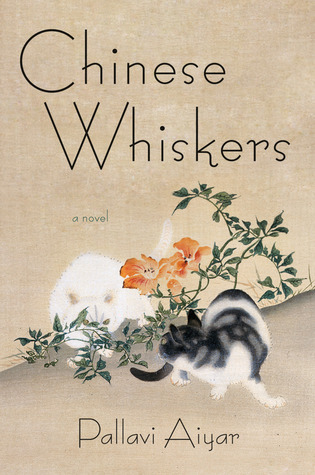
Chinese Whiskers: A Novel
Pallavi Aiyar
2012 by St. Martin's Press
ISBN: 1250014484 (ISBN13: 9781250014481)

I borrowed this book from my Public Library.

Cover art and illustrations for Pallavi Aiyar’s Chinese Whiskers are quite lovely, and those are what got me to check out the book. And I read it...all the way through...even though the characters are cats. I’ve had cats living with me, and dogs, and gerbils and horses. I truly enjoy the company and antics of my four-footed friends. But I'm not fond of animal personification, and this book is no exception.

I appreciate the study presented of Chinese society, with political and economic upheavals; the writing and story development are all good. But when the cats were commenting and offering opinions on this....Really? Many scenes have these felines responding in a typical catty way, but in others, they are nearly erudite and display emotions on a level that I just couldn’t buy into: being intrigued about their family progenitors I found quite peculiar.

But I credit the author for her writing expertise, which had me reading to the end when I would have otherwise put the book down after the first few chapters. This is a well-written book, and if you don’t mind your major characters being domestic pets, then you’ll find it a good read.

Ms. Aiyar has written several books—without animal characters. Check out her Web site.

Tuesday, December 3, 2013

Hard Ground: Woods Cop Stories - Review

Hard Ground: Woods Cop Stories
Joseph Heywood
May 2013 by Lyons Press
ISBN 0762794216 (ISBN13: 9780762794218)

I borrowed this book from my Public Library.

I find books of short stories both practical and mind-boggling. For me their practicality is in the brevity—something I can read when time is limited and I don’t want to get wound up in a long tome. The mind-boggling comes because I have no talent for writing short stories. When I find an author, such as Joseph Heywood, who can present depth of character, sense of place and a compelling story in fewer than 15,000 words, I’m awed.

Heywood has done this in Hard Ground: Woods Cop Stories. These stories depict the lives of Conservation and FWG officers. They are set in the UP of Michigan, a region Heywood knows quite well since it’s his home base for his writing, photography and outdoor enjoyment. Each story presents a different aspect of the jobs of game wardens and conservation officers. I liked the stories that are set many decades ago, as they give perspective on how the professions have changed with the times. The characters in each story (men, women, young, old) are very distinctive, and none of the stories seem repetitive, showing Heywood’s versatile writing.

I look forward to reading Heywood's WOODS COP books, and his historical novel Red Jacket.

Visit his Web site to see the variety of his activities. Really nice. Publishers Weekly has an interesting interview with Heywood. Read it here.


Wednesday, April 3, 2013

Birmingham Revisited

I received a galley of Rosalie Turner's March with Me from her publicist who knew my interest in history.


March With Me
© 2013 Rosalie T. Turner
Cypress Creek Publishing
ISBN 978-0-979237553
~ 215 pages

The story and timeframe of March with Me could be called near history. It starts in 1963, 100 years after the Emancipation Proclamation. Fifty years ago in May 1963 the city of Birmingham, Alabama became a focal point in the ongoing Civil Rights Movement. The Movement hoped to implement what were merely words on legislative papers into realities for the hundreds of thousand United States citizens who were still without equal rights. This is near history, because many of the people who were involved in the events, so meaningfully described by Turner, are still living.

Yet in the U.S., most people younger than sixty years old, no matter their ethnicity, are sorely lacking in knowledge of this pivotal time. Blacks and whites less than thirty years old quite often take for granted the social structures of today (still flawed, but immensely improved over 1963) without an inkling of what it took to reach this state. Rosalie Turner's book March with Me is a fine attempt to open eyes and minds to the realities.

Through the thoughts and activities of two Birmingham residents, the story begins in that volatile May of '63 and extends into the 1970s to show the long-term emotional affects of the Civil Rights Movement. Turner's writing is fluid and the language well thought out to portray the vitality, despair and hope of the times. The main protagonist is Letitia, idealistic and naive, as she becomes involved in the historic Children's March. She and her older brother are eager for confrontation, while their parents and most adults are fearful of repercussions from any overt action against white authority. At this time, bombings of black facilities—particularly churches--and lynchings of black citizens were still facts of life in Alabama.

While Letitia gets battered by fire hosing and the Birmingham Police riot squad, Martha Ann, her white, privileged contemporary, hears the news and wonders what it is all about. Her family doesn't live in the city, her father is a bigot, her mother doesn't work and has hired help...Letitia's mother who does day work for this family several times each week.

The aftermath of the Children's March, compounded by the 16th St. Baptist Church bombing a few months later in which four girls were killed, garnered national and international support for the Movement. But author Turner doesn't delve the politics; she continues her focus on the emotional element of the events: how Letitia's attitude changes, how Martha Ann harbors questions, how families proceed with their lives. This is one of many strengths of the book.

I would have liked more reaction from Letitia regarding the lackadaisical (unprofessional) medical care provided for her grandmother and most blacks. It is mentioned, but not explored in Letitia's thoughts. In the '50s and through the '70s, I was incensed by this discrimination, and I expected it to have more impact in this story than it did. I also wanted a bit more about Letitia's college years at a black institution; it is only mentioned in passing toward the end of the book. Likewise, I wanted to know Martha Ann's reasoning in her employment decisions; after showing the volatile reactions of her father in other parts of the book, I felt a lack of detail at this phase that could have expanded Martha Ann's character. It almost seemed as if Turner were rushing past these events to get to her very powerful ending.

For me, this 1975 ending to March with Me encompasses everything Rosalie Turner hoped to convey with this book. Letitia and Martha Ann are face-to-face and talk about those years gone by. To tell how it happens would be a spoiler, so I won't. :-) Suffice it to say the circumstance is dramatic and the interaction is poignant.

Of twelve Discussion Questions at the end of the book, I was particularly drawn to two: How do our attitudes toward race develop? and What can an individual do toward racial and ethnic understanding an reconciliation? These seem to be the questions that shaped Turner's story. They are profound and will be answered differently by nearly every person who takes time to contemplate them. After reading March with Me people will contemplate, and through Turner's insightful presentation, they just might come up with positive answers.


Rosalie Turner has published five previous books.
Turner and her husband have homes in Birmingham, Alabama and Angle Fire, New Mexico. Learn more about Turner and this title at her web site and her blog.

Historical information can be found at the Birmingham Civil Rights Institute.


Thursday, January 17, 2013

Obliterated - Review


C.J. Hall has written an interesting story about a future apocalypse and surviving it. Set in the Southwest, Obliterated begins with a woman hearing noises and looking to downtown area and seeing a lot of destruction. The destruction is being caused by some otherworldly type vehicles in the air. She begins getting things together so that she can leave her house. She calls her husband and they take to the hills. The way they survive, trying to avoid the invaders as well as people who are panicking because of all the destruction, is extremely interesting and very well researched. The description of the hills and mountains where they take refuge is very believable.

I don't know that I would have as much common sense as was shown by the characters in this book. The subtitle, Would you know how to survive, is very apropos. I don't think most people would know how to proceed if their world was suddenly devastated and they were forced to live by their wiles.

The alien invasion was a good setup for this type of a story, but it could just as easily have been some horrible natural disaster, or political upheaval. By giving it the space invaders touch, Hall has managed to keep this from seeming like a extremists survival manual. Some of the information got a bit long but at the same time it was all very important, and is especially important if you are interested in knowing what to do under circumstances similar to these.

Characters were distinctive, although the dialogue often got lengthy. Generally well written.

Tuesday, January 15, 2013

Foxy' Tale - Review

My goodness a book about vampires.? Not something I would usually read. The word vampire was right there in the title but I bought the book anyway. Maybe it was the delightful cover design. At any rate, Karen Cantwell's Foxy's Tale: The Reluctant Vampire Book 1) Foxy Anders getting a new life together in the heart of DC was lively and really interesting. It had some really funny parts, too. Fortunately, for my reading tastes, they vampire part didn't show up until late in the book--actually that's not true, the vampires were hinted at from the very beginning but it was subtle and it didn't interfere with this story about Foxy.

Throughout the book there was a switching of point of view many times and that took some getting used to. Sometimes it seemed omniscient, but other times it was just a third person presentation. I'm rather picky on this type of thing, but I kept reading and got used to the style. Not only did we get Foxy's point of view, but that of her teenage daughter, Amanda, her two tenants, Myron Standish and Knot, and her daughter's boyfriend.

All of these characters were very interesting and sometimes whimsical. They were distinctive and well-written. Near the end of the story when the vampires showed upf or real, the action moved very swiftly--almost too swiftly. Because of this, the ending felt a bit rushed.

Sunday, January 13, 2013

The Chief – Review

I borrowed The Chief from my Public Library.

It is interesting to have read prolific sport writer Robert Lipsyte's book right now when I am actively following and have even participated in, Idle No More—the First People's protest that began in Canada. The Chief, ends up being about American Indian heritage and reservation discord, with the feature person involved being Sonny Bear, a young prizefighter who wants to try for the heavyweight title. The story is told in first person by his friend, an aspiring writer, Martin.

The story started off rather slowly with way too much information about boxing for my taste; but I guess knowing the ins-and-outs of that sport is important. The real story seems to be Sonny accepting his heritage, and trying to do something about the discontent on his reservation in upstate New York.

The writing was smooth, although I felt the story was a bit convoluted. I'm not sure how Lipsyte would have gone about making the story more focused on the Indian situation, and without doing that it seemed The Chief was a little disjointed: boxing, Indian rights, boxing… Even the title is misleading, since that moniker never gets used. It is suggested by Hollywood people who want to make a TV movie, but it is rejected by Sonny and Martin.

In all, I found the book interesting, even with what seemed to be indecision about the book's focus.

Friday, January 4, 2013

The Abacus Protocol: Sanity Vacuum - Review

I received this book from the publisher through Net Galley.


I'm always interested in science fiction books especially those about future colonies and New World type things this was sort of that way in that it takes place in the 31st century when space colonies are nothing new. What is new for the protagonist is that she's getting a new job she's always been very interested in artificial intelligence and supercomputers. Our protagonist, Vivian Skye, is from a small colony planet that doesn't like the idea of supercomputers. In fact, Vivian's family has ostracized her because of her interest in her study at school into this realm of science. Now that Vivian has graduated, her first job is very exciting to her; she is going to be working and isolated Extra-Galactic Observatory with one of the original AI computers that is close to sentience. But of course no one wants any of the AI computers to be sentient. That's what the Abacus Protocol is all about--to make certain that the computers do not become sentient.

At the Observatory, there are two scientists and a tech who maintains all of the space mechanical equipment, and there is her boss, Bryce Zimmer who oversees it all. Vivian's job is to study the computer, do updates and basic maintenance to see that everything is working well. Unfortunately, she discovers that no maintenance has been done on the AI, whose name is quirk--that's, quIRK--, for nearly 12 years. Quirk has a personality all his own that Vivian likes. Work has even had cats brought onto the station because he feels they are good for the human mindset. It's also a fact that quIRK likes the cats. A hint at his near sentence.

Everything would be working fairly well if it weren't for the fact that Zimmer, her boss, has grandiose ideas about himself and the planet that he comes from which is an oligarchy and he is trying to get back to the top rung of the political heap. Not only is his planet and oligarchs setup based on old Earth Rome, but he's also a chauvinist. He sees Vivian as a threat. He manages to put a sub-routine in quIRK's programming that causes various accidents to Vivian. His neuroses become so great that it threatens the entire space station. During all this quIRK become sentiment.

The writing in this story was very good. I could picture each scene and imagine the space station and all people very well. I like stories that are visually pleasing through words. Thea Greg's background in physics and other sciences has made this story very believable. Character development was good, and Vivian Skye, is quite likable.

The download I received for my Kindle had some formatting problems: lost paragraphing between dialogue, run-on sentences, and such. This surprised me, since I follow the Curiosity Quills (the publisher) blog, where several articles have been posted about e-book presentation. I hope the formatting for the final product has been cleaned up.

I had a bit of trouble with the ending. It seemed a little too tidy and rushed. There were several things that didn't really add up to the detail that had been in other parts of the book.

Overall, I enjoyed the story. This was subtitled, Sanity Vacuum, and I get the feeling there might be another ABACUS Protocol story in the works.

The ABACUS Protocol


Wednesday, December 19, 2012

Liberty Lanes - Review

I borrowed this book from my Public Library.

Paperback, 192 pages
2011 by University of Nevada Press
ISBN 0874178576 (ISBN13: 9780874178579)

As an oldster, reading about oldsters, I believe that Robin Troy has given poignancy and truthfulness to the subject of old age..


Her short novel Liberty Lanes is about relationships among a group of long-time friends in a small Montana town. All are more than 70 years old; they bowl together, have parties, and generally enjoy having fun. Then stalwart member Nelson Moore prevents one of the women, Fran, from choking to death on a chicken bone. Nelson is a hero; he is interviewed by the local papers. And that's where their interactions get a bit wobbly. It's also when they notice that Nelson is losing his cognitive abilities.


Each chapter is written from a different point of view, beginning and ending with Nelson, as the group is suddenly very conscious of previously ignored circumstances. Fran becomes frightened by her own impermanence; Bethany, always courageous, harbors worry that she could have done something to offset Nelson’s condition; Alistair (blind since in his 20s) seems to have insight about each of them that they don’t realize themselves. The young journalist Hailey James eventually notices Nelson’s condition, too, but not before the interactions of the group have given her reason to contemplate her own relationships—or lack thereof.


I’m fortunate that no one in my family has suffered from Alzheimer’s or even mild senility. But I have several friends from whom I’ve learned about this sometimes sudden disease and caring for those who have it. Robin Troy’s depiction of Nelson, slowly losing bits of himself, is well written, and seems to mirror what I’ve heard from my friends. It would have been easy for this book to be a real downer—especially since I’m in this age group, but Liberty Lanes gives a dignity to it all that for me was unexpected.


Sunday, December 16, 2012

A Pinch of Dust - Review

I really enjoyed this historical Christmas short story by Carol Buchanan. "A Pinch of Dust" (10K words) not only tells a story of goodwill and caring for others, but portrays the rough living conditions of a 19th century mining town.

It takes place on Christmas Eve, 1864, with all the cold winds of Montana and with a child begging on the street. "Mister, can you spare a pinch of dust?" she asks Dan Stark.

Dan's reaction? He gets himself into a poker game with the girl's dead-beat father.

This gets him into big trouble with his wife, Martha, and his stepchildren, Timothy and Dotty. "You'll be sittin' in the seat of the ungodly!" Martha says.
His intentions are really good. But can he pull it off?

Set in Virginia City, Montana Territory, Buchanan has employed her great character--Dan Stark, from her Vigilante series--as the protagonist. There's also a lot of card-shark talk (beyond me, but interesting just to see the ins-and-outs of a five-card stud game).

Author's notes at the end are also interesting.


Tuesday, December 4, 2012

The Weapon - Review


I was lucky enough to win a copy of The Weapon in a Goodreads Giveaway.

The Weapon is Heather Hopkins' first Thriller, and it is full of action and intrigue. Hopkins' education includes a degree in business, and this shows in the setting of this face-paced novel. The protagonist, Veronica Stone, is a financial wiz and high-tech entrepreneur who has built a fantastic international business. Her own tech innovations make headlines worldwide. Although she's incredibly successful, a tech genius, and beautiful, to boot, she is burdened by the drive to always be on top, to attain more and more acclaim. This leads her into an unhealthy liaison with some international nasties.

By the time Veronica realizes she's made the wrong move, she in too deep, framed for an attempt to kill the U.S. President, and the target of her recent creation--an application of a Cold War weapon--a devastating way to spread a wasting disease throughout society and especially on top officials. The creators expect to use this to take over the governments and bring themselves to world power.

Veronica is chased through several countries, but her masterful abilities (did I mention she's a martial arts expert?) and wit help her survive.

The Weapon is persuasive. Hopkins is a very good writer, and the characters are richly drawn and believable, which adds to the tension of the story. I cared about Veronica and her plight, and her friends and family.

The ending hints at a sequel. I look forward to it.