Showing posts with label writing style. Show all posts

Monday, October 19, 2015

Character Variety

An interesting article popped up in the GITP inbox. Written by Noah Lukeman, (author and literary agent) he gives a detailed examination of what type of characters compel readers. In his article "The Importance of the Journey" he writes:

"...The task of the writer is to create characters...on the verge of change, characters that will, in some way, be unrecognizable by the end of the work...."

The detail given to support and implement his premise is very compelling, but it shouldn't be taken as an absolute. It depends on what you're writing.

Historical fiction and romances benefit from the character's journey. In mysteries, however, where a series will have an ongoing detective character, it would be tedious to have each new title fraught with the main character having some major angst and changing by the end of the book.

To me, the "going through a change" type story a bit like a morality play. It seems rather nice for the naïve and is especially good in fiction for young readers. I've written YA books, and know that teaching some imperative is vital. But it seems quite easy to predict what will happen if the character is set up to 1) suffer some ignominious circumstance; 2) recognize the pitfalls; 3) make a change for the better. Ho hum. (Lukeman does represent screen plays, however, and to me it seems that writing for film most times fits into the "naïve" category.)

I'm drawn to stories that present "slice of life" situations, where characters don't always solve their dilemma as a denouement of the story. A book I truly enjoyed was The Secret of Hurricanes, by Theresa Williams, where we meet a troubled, but interesting person and follow her through situations of pain as well as glory. In the end we see what she has become, although it's not a given that SHE sees what she's become.

Jan Blensdorf's My name is Sei Shōnagon has a similar development. We have learned what made this character who she is today. I'm happy with that. Perhaps this might be what differentiates "popular" fiction from "literary" fiction. Both of the titles I referenced are probably considered the latter.

This all just shows that "what's sauce for the goose, ain't sauce for the gander." My opinions versus Lukeman's are why there are myriad fiction books produced each year.

Three cheers for variety!

Saturday, October 10, 2015

Time to Update Important Books


How old is your dictionary? If it's more than three years old, you might want to upgrade. The eleventh edition of the Concise Oxford English Dictionary was published in 2004, revised in 2006, and again in 2008 (it's available on CD, and is automatically on all Kindles) with hundreds of new words added. Websters is also in it's eleventh edition. Do you have Chicago Manual of Style, or Strunks The Elements of Style? Recommended for serious writers.

Remember, your library can be virtual—with the myriad ebooks, APIs and downloads for you computer, you can have volumes at your fingertips.

Wednesday, February 2, 2011

Poorly Wrought Books What Not To Do

A friend's recent post over at Facebook listed a link to a NYT article about memoirs. In it, the author gives his list of things NOT to do if you're bound and determine to write your memoir. It's unfortunate that the article was a few years too late for author Meloy's The Anthropology of Turquoise. The language was well crafted, but the entirety didn't capture me as a volume of import. I'm sure someone else has/will read it and be smitten.

The Prison Ship also had a few things authors should not do.

Do not think your prose is so witty that it can't be streamlined; do not use adjectives (often multiple adjectives) in eight out of ten sentences; do not sacrifice story line for verbose descriptions (even elegant descriptions) of rooms and restaurants and food.

I admit I'm picky, but phrases such as "wander apparently aimlessly" and "his hands lying apparently idle" and "he moved apparently quite casually" are awkward. As is, "[His thought] of her body beneath the clothes revealed in his memories as effectively as the bodies of travelers passing through the new airport X-ray security machines."

One character spoke "trenchantly" two times in three consecutive paragraphs; or how about "[they effused] angry negativity and almost childishly sulky resentment." I don't think I've read a book with more adjectives and modifiers.

Wedged within this was a mystery that seemed like an afterthought; it was convoluted and overrun by the heavy prose; I found no charm in it.

Saturday, December 18, 2010

Grave Undertaking Character Perspective - Review

In the contemporary mystery Grave Undertaking, protagonist Barry Clayton has returned home from several years of police work to help with the family funeral business. His father has Alzheimer's and decisions have to be made. While attending business at the graveyard with a local minister, the grave diggers unearth a murdered corpse on top of the burial vault they had come to move. A wallet in the murdered man's pocket reveals a photo that shocks Barry—it's of his girlfriend, Susan.

Susan immediately becomes a suspect in the murder, and Barry is drawn into an "unofficial" investigation to protect her and her family from scandal. As he develops clues, interviews people, gets shot at and beat up, he also must continue his mortician work and decide if selling the business to a national funeral home chain is in the best interest of his family.

I was struck by the fluid and spare way the author got from one segment of the story to another. I think this element stood out for me because a book I had attempted right before this one had been ponderous in its story movement.

In one section (of the book I didn't finish), it took several paragraphs for a character to get out of his car, up the steps, through a series of doors and into his apartment. Yet nothing was revealed during those paragraphs that brought nuances or information to the story or the characterization. Details were given like stage settings. Another segment had: "I stood and extended my hand to her. Laura took it, and then used it to slip her arm around my back." Not only is this hard to visualize, but it doesn't advance the story. These sentences were part of five paragraphs at the beginning of a chapter that were merely setting a scene--a scene the reader had been in for the past fifteen pages. When dialogue that would get out information did begin, it was repetitive and stilted. Also "I extended my hand. She took it," shows up at least four other times in what I read. Hence, Castrique's book seemed swift and lively by comparison.

Grave Undertaking involved the first person protagonist in all aspects of the story, even the descriptions. In the other book, the protagonist seemed more like a camera lens, showing the details without any invested emotion. Even when "to slip her arm around my back" happened, it wasn't followed with how that made the protagonist feel. Castrique's book had only one hand-holding sentence and it told a lot in eleven words. "I reached down and grabbed her hand with a gentle squeeze." The action words--grabbed and squeeze--give expression to the line; gentle lets you know his tender feelings.

Writing style and presentation carry a lot of weight with me, and even when I don't intend to, I analyze these characteristics in every book I read. I imagine most readers do, in their subconscious at least, and their reactions to these elements result in a positive or negative response to the book.

Friday, November 26, 2010

GITP Guest Linda Sandifer on Platform

Thanks to Linda Sandifer for providing this Guest Post.

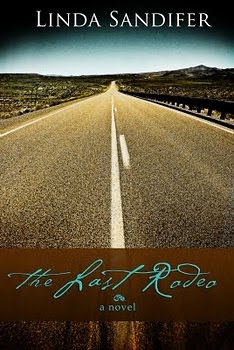
Linda Sandifer is author of thirteen novels in various genres, mostly western romance. She is a member of Western Writers of America, Women Writing the West, and Idaho's Blue Sage Writers. Her latest release, The Last Rodeo (contemporary fiction) is available at Amazon and Barnes and Noble online. It is also available in the Kindle Store. Learn more about Linda's books at her Web site.

Build Your Platform Today
© 2010 Linda Sandifer

We writers continually face the challenge to keep our writing fresh for today's readers and also to be knowledgeable about new technology and marketing trends. We are expected to be able to describe our book and its concept in one line and to state our platform right up front. The platform has, in fact, become increasingly important to agents and editors before they will consider a contract. They want a ready-made audience and a way to create a buzz for your book. In this tough market, it isn't sufficient anymore to assume the publisher will handle the marketing so you can sit back and write your next book. They want you involved.

So what is a platform for a writer? According to Merriam Webster, a platform is simply "a plan, a design." It is: (1) "a declaration of the principles on which a group of persons stands," (2) a "device or structure incorporating or providing a platform," and (3) a "place or opportunity for public discussion."
We spend months, sometimes years, plotting our books. When the book is finished, it's time to take a good hard look at ourselves. What have you got going for you--other than having written a marvelous book--with which to get readers' attention? If you look through Writer's Digest Magazine, you'll see some of the "Breaking In" writers state their platforms as social networking; i.e., a blog and an audience on Twitter and Facebook. This might also include doing guest blogs and having a website. Some writers write articles for magazines, ensuring a byline. Other writers speak at conferences and talk to writers' and readers' groups, or they teach writing classes. It's always smart to join a writer's organization that reflects your genre. This will open more doors with which to reach readers. If you have special expertise pertaining to your book it will give you more credibility. For example, you're a doctor and you've written a medical thriller.

What if you feel you don't have any particular expertise with which to build your platform? No title behind your name. No Masters or PhD. Does it doom you and your book? No, just dig deeper. Be creative. Perhaps you did an incredible amount of research for your book. Perhaps you spent a year talking to locals and exploring the Australian outback where your book is set. Is there a way you can "brand" yourself? To identify yourself in some unique way?

A platform boils down to any means you have to get your name and your book out there. Start building your platform early on, even before your book is finished. A solid platform will help you get published and maybe even become a "name brand" writer. But, first and foremost, write the best darned book you can! Everything else aside, your book will stand on its own legs. It will be the foundation for your platform.

Here are two of Linda's platforms: her blog and her Web site.


3 comments on original post:


  1. This is so true, Linda - and not easy for us "breaking-in" authors. It can take years to get a name for yourself, I think.
    Great, and interesting, post.
    Sue
    ReplyDelete
  2. Thanks, Sue. Glad you enjoyed it. I think it's hard for all authors, even those of us who have been around for awhile.
    ReplyDelete
  3. Thanks for this post! Lots of good information to think about.
    ReplyDelete

Tuesday, November 23, 2010

Telling the BackStory

Here are two books that have different and effective ways of telling the backstory. The tactic often used is a direct narrative about the past, but these authors were more creative.

In the historical piece, The Diezmo, Rick Bass used a first-person narrative, and the reader learns right at the beginning that the story is a remembrance, told fifty-years after the fact. This allows information to be presented that the narrator wouldn't have known at the time, and we're told that:"...he always paused near the end. It was not until much later...that I found out he had been skipping a sentence..." (page 11). Background information about characters is given ("$1400 worth of jewelry…")--precise facts that the narrator wouldn't have known at the time. Bass could also relate incidents about other people who weren't in the narrator's presence--information the narrator learned during the ensuing 50 years ("John Alexander and his group spent the rest of the day lying in that pool...In the meantime--never dreaming of Alexander's success...")

The book's Epilogue reinforces the fifty years that have past before the telling, and gives closure to the story.

The other title is contemporary. In Blue Dog, Green River author Brock Brower chose to make his first-person narrator the recipient of a story. The "I" character is river rafting with a friend, and the friend, Paul, tells the story. Opening lines: "'I spaced the dog [Blue Dog].' Paul Nozik started telling me his story up on a Navaho sandstone ledge..."

The narrator isn't really a participant in the story, but the verbose Paul tells it all, including the background of other characters, the geology of the region, and more. The reader is reminded of the passive narrator on occasion: "Paul stood up, dusting his palms, you could see excited. He does love to tell you the best part of a story…He got me up, politely dragging me along for company, talking his way around to the far side of this squared-off limestone." Brower breaks up Paul's storytelling with chapters from Blue Dog's perspective, in an omniscient narration rich in language and detail.

Both authors kept their stories short (Blue Dog, Green River - 108 pages, The Diezmo- 208 pages) and I enjoyed reading these well-crafted books.